

Which compact SUV – 2026 Ford Escape or 2026 Hyundai Tucson – has the most flexible powertrain choices for Pottsville, PA?
Miracle Ford – Which compact SUV – 2026 Ford Escape or 2026 Hyundai Tucson – has the most flexible powertrain choices for Pottsville, PA?
Shoppers comparing compact SUVs often ask a simple question that carries a lot of weight over years of ownership: Which vehicle gives me the most powertrain flexibility without forcing compromises in everyday drivability? When you focus on the Ford Escape and Hyundai Tucson, that question gets to the heart of how each SUV is tuned and what each lineup offers. If your daily rhythm around Pottsville, PA mixes highway sprints, neighborhood errands, and weekend detours, the answer matters more than any single spec. Here is how to think about it in a way that lines up with real life.
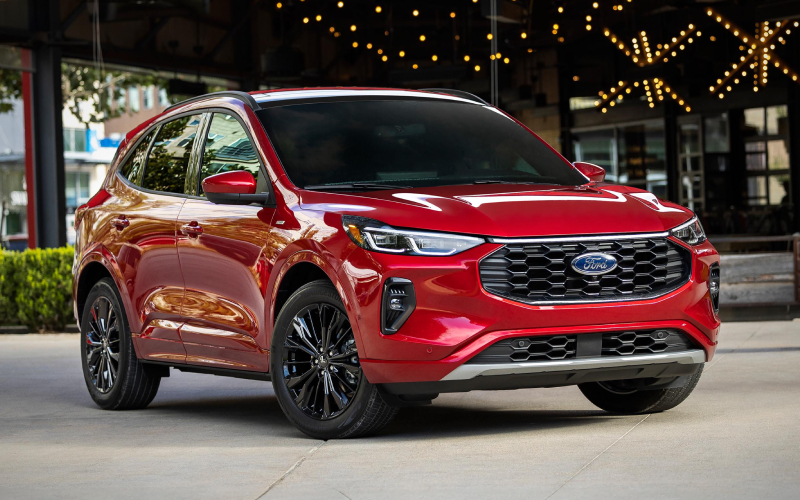
Start with breadth of choice. The Ford Escape lineup provides multiple distinct paths: gas-only with an efficient 1.5L turbocharged engine, a stronger available 2.0L turbo for drivers who value extra passing power and higher tow ratings, and two electrified choices—a Hybrid and a Plug-In Hybrid—for clean, quiet commuting. That means you can prioritize acceleration, efficiency, or a smart middle ground without leaving the Escape family. The Hyundai Tucson lineup also comes in gas-only, Hybrid, and Plug-In Hybrid flavors, and the hybridized versions deliver satisfying torque and smooth response. Where the Tucson differs is the absence of a higher-output, non-hybrid turbo option that can carry more towing and deliver extra punch without adding hybrid hardware. If you want straightforward turbo power plus a confident tow rating, the Escape’s 2.0L engine is the difference-maker.
Beyond the engines themselves, transmission behavior and day-to-day smoothness shape how an SUV feels during the commutes and quick hops most of us drive. In the Escape, the pairing of turbocharged power and a well-calibrated automatic helps keep revs low when cruising and serves up willing thrust when you need it—such as timing a merge onto a busy highway. The Tucson’s eight-speed automatic is composed and pairs nicely with its 2.5L engine; its electrified models use a design that emphasizes steady delivery and calm refinement. If you spend a lot of seat time traversing rolling elevations or prefer throttle response that feels lively at part throttle, the Escape’s turbocharged option provides a noticeable edge while preserving easy manners in traffic.
Of course, flexibility is not only about what is under the hood. It is also the way an SUV adapts to evolving needs—growing kids, a new hobby, or more frequent weekend trips. On that front, the Escape has practical touches that matter, like sliding second-row seats that let you prioritize legroom or cargo volume on the fly, plus an available hands-free liftgate that opens with a simple foot motion when your hands are full. The Tucson counters with a thoughtfully designed cargo area and, on upper trims, a Surround View Monitor that removes stress from tight parking spots. If your routine involves varied cargo one day and adult passengers the next, the Escape’s sliding rear seats are the kind of feature you will use—and appreciate—often.
Finally, consider the support systems that keep your drive relaxed. Both SUVs deliver modern driver-assist technology—automatic emergency braking, lane guidance, and available adaptive cruise control with lane centering. The Escape’s Active Park Assist 2.0 can help guide you into a space, while the Tucson’s available Highway Driving Assist and Remote Smart Parking Assist add convenience in the upper trims. Infotainment is intuitive in both, with wireless Apple CarPlay and Android Auto standard to keep cords out of the picture. The question to ask yourself during a test drive is simple: Which system helps you settle into your routine faster? For many drivers, the Escape’s interface and sightlines make it feel instantly familiar.
For shoppers who like to map the journey across years rather than months, a compact SUV with a broader set of powertrains—and the ability to shift easily between weekday and weekend roles—is worth prioritizing. The Escape’s unique availability of a higher-output non-hybrid turbo, in addition to Hybrid and Plug-In Hybrid models, defines that kind of flexibility. The Tucson’s lineup is strong, especially on the technology front, but if you want an option that maximizes power without adding complexity, the Escape checks a box the Tucson does not.
At the dealership level, that flexibility also means clearer guidance during your shopping journey. With the Escape, it is straightforward to match the engine to your priorities: stronger towing and punchy acceleration, battery-assisted daily driving, or a balanced gas-only setup. Those are meaningful branches on a decision tree—not minor trim variances. Plan to test the Tucson in both its gas and hybrid configurations, then drive the Escape in its 2.0L turbo and Hybrid forms. You will feel the differences more than you will read them on a sheet.
Looking for help choosing between these two? Our team at Miracle Ford—serving Lehighton, Hazleton, and Pottsville—walks customers through back-to-back drives that focus on the moments that matter: quick merges, low-speed steering feel for parking, brake feel in stop-and-go traffic, and how the seats and storage actually work with your daily routine. That is the kind of comparison that turns a shortlist into a smart decision.
Below are a few considerations to frame your drives and questions.
- Clarify your priority: maximum tow rating, strongest passing power, or electrified commuting.
- Map your routes: frequent highway merges, steep grades, or tight urban parking.
- Test cargo flexibility: evaluate how the rear seating and liftgate access match your gear.
- Check assist features: try adaptive cruise, lane centering, and parking aids you will actually use.
- Evaluate infotainment: confirm wireless integration is quick and controls feel intuitive.
Frequently Asked Questions:
Which model offers a non-hybrid turbocharged engine with higher output?
The Ford Escape offers an available 2.0L turbocharged engine that emphasizes quick acceleration and confident towing without hybrid components. The Hyundai Tucson does not offer a comparable non-hybrid turbo option in its current lineup.
Can both SUVs be configured for electrified driving?
Yes. Both the Escape and Tucson offer Hybrid and Plug-In Hybrid models, giving you electrified options for quieter commuting and strong low-end response.
What should I test on a back-to-back drive?
Focus on a highway merge for midrange power, a tight parking maneuver to assess visibility and steering, and a quick cargo test to see how the rear seating and load floor handle your everyday items.
When the question is about powertrain flexibility, you want more than one good answer—you want a complete set of choices. That is where the Escape distinguishes itself. If you are ready to test the difference, plan a visit and bring your routine with you. You will know quickly which SUV is set up to meet it.
Miracle Ford is proud to support drivers in Tamaqua, PA with a knowledgeable team and an inventory tailored to local needs. From quick test drives to in-depth walk-throughs, we are ready to help you feel confident in your choice. Visit Miracle Ford to experience the 2026 Ford Escape first-hand in Tamaqua, PA.

0 comment(s) so far on Which compact SUV – 2026 Ford Escape or 2026 Hyundai Tucson – has the most flexible powertrain choices for Pottsville, PA?