


Is Ford BlueCruise on the 2026 Explorer the right fit for daily commuting around Hazleton, PA?
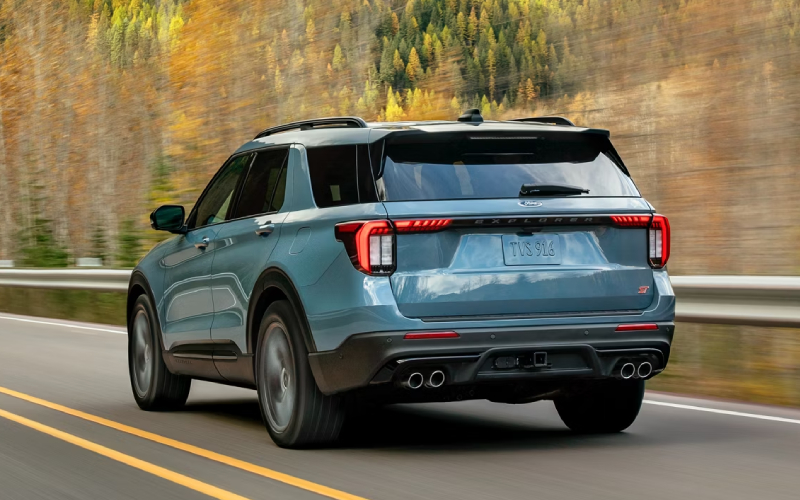
Miracle Ford – Is Ford BlueCruise on the 2026 Explorer the right fit for daily commuting around Hazleton, PA?
Hands-free highway driving can sound futuristic, but on the 2026 Ford Explorer, Ford BlueCruise is designed to make everyday travel calmer and more consistent, especially when your route includes stretches of I-81 or longer drives to work. If you are weighing whether this technology belongs in your next SUV, this guide breaks down how BlueCruise works on Explorer®, when it adds the most value, and how to get the most from it on Pennsylvania roads.
BlueCruise is a hands-free highway driving assistance feature that helps you accelerate, brake, and steer on compatible, mapped sections of divided highways while you keep your eyes on the road. On Explorer Platinum™ and ST, BlueCruise is equipped and integrated with the vehicle’s broader driver-assist systems, so transitions into and out of hands-free operation are intuitive. The result is a calmer cruise in steady traffic and a more relaxed driver after longer stints behind the wheel.
How BlueCruise supports real-world commuting
BlueCruise shines on predictable highway segments—think the morning glide down I-81, evening returns on Route 61, or weekend trips that link across major corridors. It helps manage speed and lane centering, so you can maintain focus on what is happening around you rather than hovering over micro-corrections. When traffic ebbs and flows, BlueCruise works with Adaptive Cruise Control to help preserve your set following gap, easing that stop-and-go fatigue that can creep in during busy hours around Hazleton, PA.
Because the system is sensor- and map-aware, it knows the difference between compatible highway sections and areas where hands-free operation should pause. You will see clear prompts in the cluster and center display when BlueCruise is active, when it requests driver input, and when it is transitioning to traditional driver-assist support. That clarity makes the system feel natural within a day or two of use.
What it feels like on Pennsylvania grades and curves
Our region mixes long grades with gentle sweepers and variable weather. BlueCruise helps the Explorer® hold lane position smoothly on those arcs, and its speed control feels measured on descents. While the system does not replace attentive driving, it reduces workload in the exact moments that contribute to fatigue—long straights, stable curves, and light traffic hum. You remain in the loop, with visual cues and light steering feedback that communicate what the vehicle is doing and what it will ask of you next.
On mornings when road surfaces are wet or visibility is reduced, you can choose to run traditional driver-assist functions without hands-free engagement. Explorer’s Ford Co-Pilot360® Assist+ suite—including Adaptive Cruise Control—is there as a reliable baseline, and you can bring BlueCruise back in when conditions improve and you return to compatible highways.
Trim and feature considerations
If BlueCruise is a priority, focus your search on Platinum™ and ST. These trims pair the system with features that complement longer drives, such as available heated and ventilated seats, a B&O® Sound System by Bang & Olufsen®, and the Ford Digital Experience for intuitive infotainment. If you prefer the look and value of ST-Line or the versatility of Active, remember that Ford Co-Pilot360® Assist+ still delivers core driver-assist functions for confident daily driving even without hands-free capability.
For those who split time between highways and backroads, Intelligent 4WD is worth adding. It works alongside your driver-assistance tech to help Explorer® feel planted when weather shifts or when your commute includes gravel or steep driveways outside town.
BlueCruise best practices for first-time users
Adopting a new driving assistant goes smoother with a few smart habits. Use these checkpoints to build confidence quickly and make the most of the system.
- Know where it works: Hands-free engagement is for compatible, mapped divided highways—watch for the on-screen prompts telling you when BlueCruise is available.
- Keep eyes on the road: The driver-monitoring component helps ensure attention stays forward; your role remains active and engaged.
- Ease into it: Try BlueCruise first on a familiar highway segment during lighter traffic, then expand as your comfort grows.
- Use your tools: Pair BlueCruise with Adaptive Cruise Control and the 360-Degree Camera for a complete confidence package from driveway to freeway.
- Stay updated: If software updates are available, install them to maintain performance and feature refinements.
With those basics, most drivers find BlueCruise feels natural by the end of the first week. It is not about replacing the driver—it is about reducing the constant micro-adjustments that add up over time.
Who benefits most from BlueCruise?
Commuters with consistent highway mileage, families that take regular trips across the region, and drivers who simply want a more peaceful interstate experience are prime candidates. If your day-to-day is mostly city-center travel with frequent turns and short hops, you will still appreciate Ford Co-Pilot360® Assist+, but BlueCruise’s biggest benefit shows up when you are covering longer distances at a steady clip.
Frequently Asked Questions:
Is BlueCruise standard on every 2026 Ford Explorer?
BlueCruise is equipped on Platinum™ and ST. Other trims feature Ford Co-Pilot360® driver-assist technologies, with availability varying by package.
Can I use BlueCruise in heavy rain or snow?
BlueCruise relies on sensors, cameras, and compatible highways. In poor visibility or inclement weather, it may reduce availability or request driver control. You can always revert to traditional driver-assist features and resume hands-free use when conditions improve.
Does BlueCruise work on two-lane roads?
No. BlueCruise is designed for compatible, mapped divided highways. You will see prompts when you enter and exit those areas.
How does BlueCruise differ from Adaptive Cruise Control?
Adaptive Cruise Control maintains your speed and following distance, while BlueCruise adds hands-free steering assistance on compatible highways. The systems work together to reduce workload and enhance comfort on long drives.
To see how BlueCruise fits your life, schedule a drive and ask us to map a route that mirrors your commute. You will get hands-on time with the on-screen prompts, learn how the system engages, and see how it works alongside features like the 360-Degree Camera. Miracle Ford is here to help you compare trims and choose the right Explorer® setup for your routine, serving Lehighton, Hazleton, and Pottsville with knowledgeable guidance and friendly support.

0 comment(s) so far on Is Ford BlueCruise on the 2026 Explorer the right fit for daily commuting around Hazleton, PA?